The Rules That Decide The Design
Rainwater Has A Legal Route, Not Just A Downhill One
Garden drainage is one of the few parts of landscaping with a genuine rulebook behind it, and it is worth knowing what it says before anyone starts digging. Where surface water is allowed to go, who has to agree to it, and what needs a formal consent are all fixed points. They change what a scheme costs, so we settle them at the survey rather than halfway through.
What applies to your garden depends on your ground conditions, your existing drainage and your property, so read the below as the checklist we work through on site rather than a conclusion about your address.
The Part H hierarchy comes first
Approved Document H of the Building Regulations sets the order for rainwater disposal: infiltration into the ground where it is reasonably practicable, then a watercourse, then a sewer. It is a hierarchy, not a menu. Surface water should not be put into a foul sewer where an alternative exists, and doing so can overload the system and cause problems downstream. On a plot where infiltration genuinely will not work, that has to be demonstrated rather than assumed, which is what the trial hole and percolation test are for.
Soakaway design, not soakaway guesswork
A soakaway is sized from a measured percolation rate using the BRE Digest 365 method, not from the size of the patio. It is normally kept at least five metres from a building so that discharge is not softening the ground under foundations, and clear of boundaries, drains and tree root protection areas. Birmingham ground varies a lot: free draining sand and gravel in some areas, heavy clay or made ground in others. On clay, a soakaway can fill faster than it empties, and a different solution is the honest answer.
Connections and consents around Birmingham
Severn Trent Water is the water and sewerage undertaker for Birmingham, and a new connection to a public sewer is made with the undertaker's approval under section 106 of the Water Industry Act 1991. If the proposal is to discharge into an ordinary watercourse, ditch or culvert instead, that normally needs land drainage consent from the lead local flood authority under the Land Drainage Act 1991. Birmingham City Council is the lead local flood authority for the city. These are not obstacles, but they are not things to discover after the trench is open.
What sits above the drainage matters too
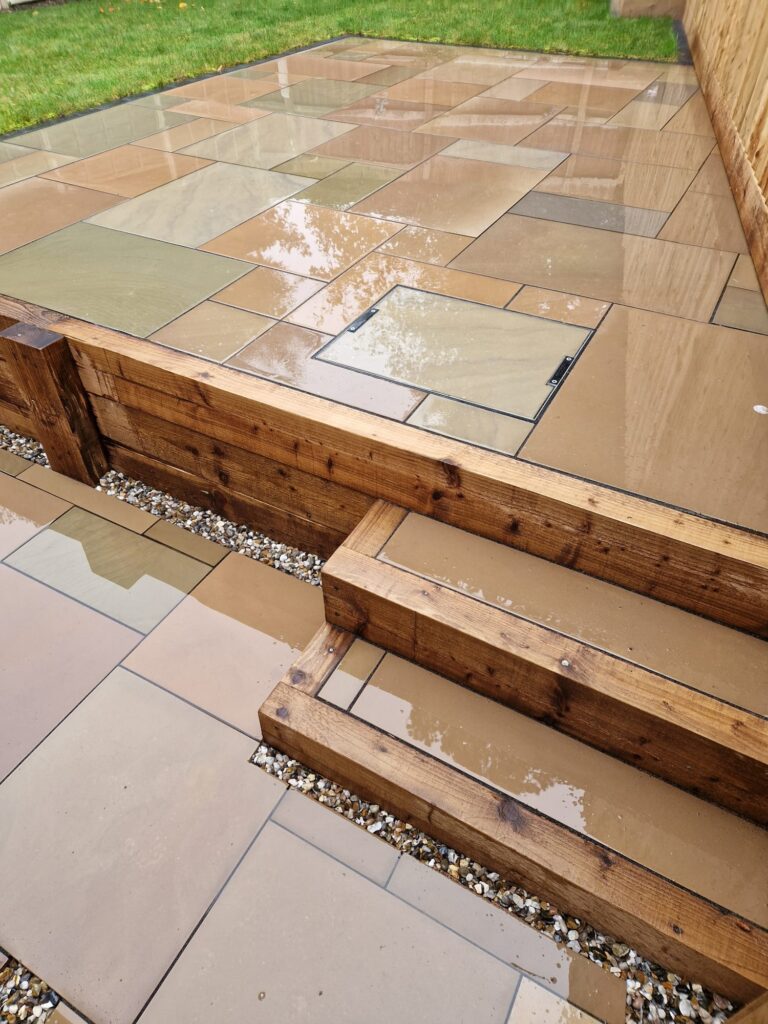
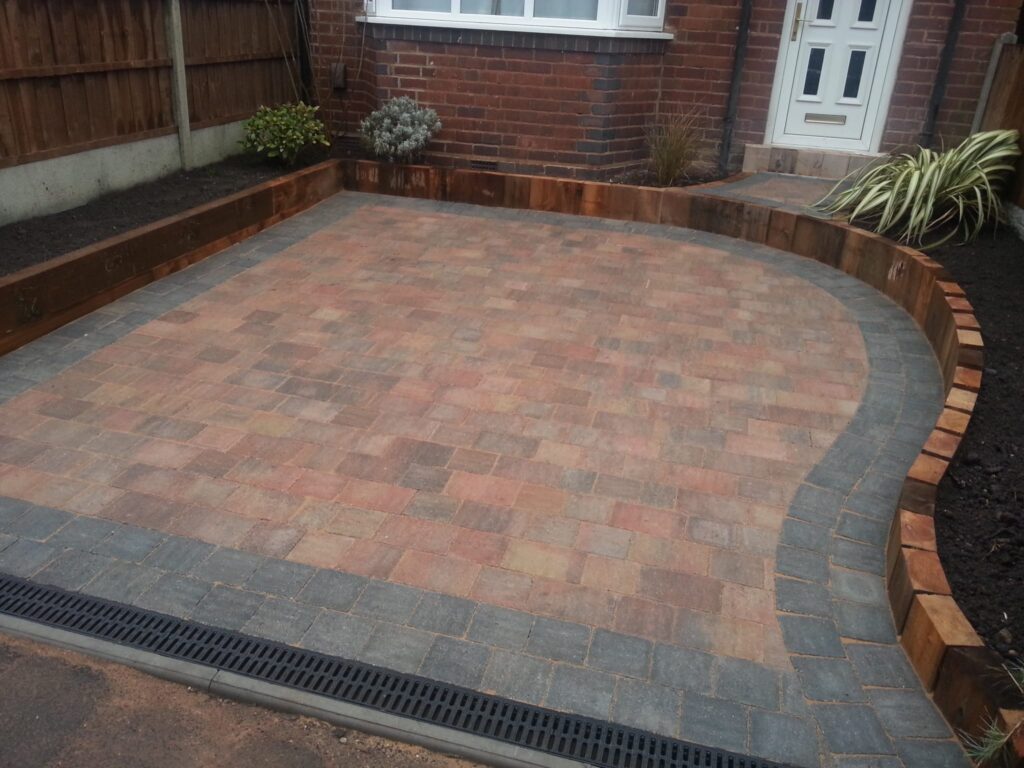
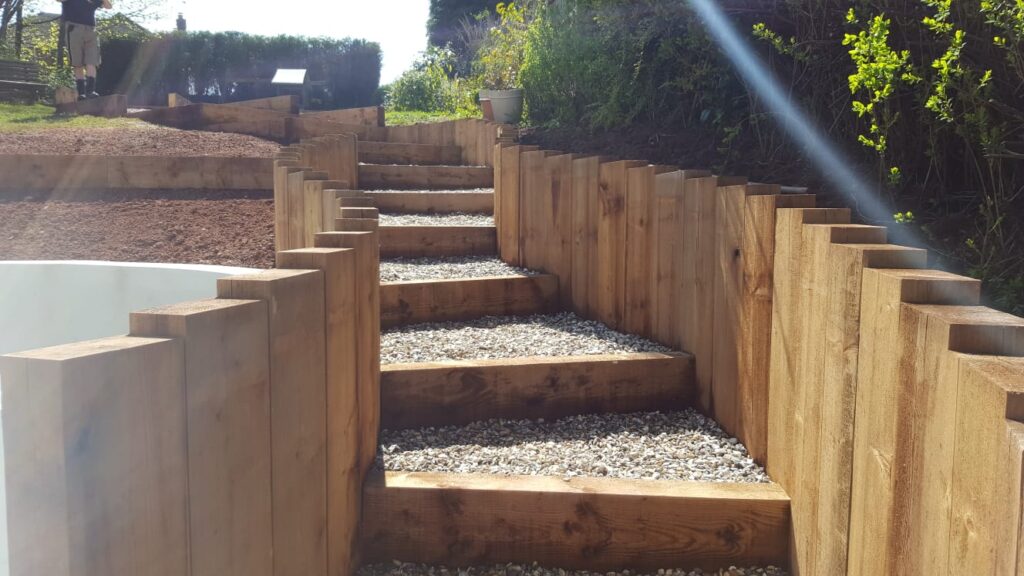
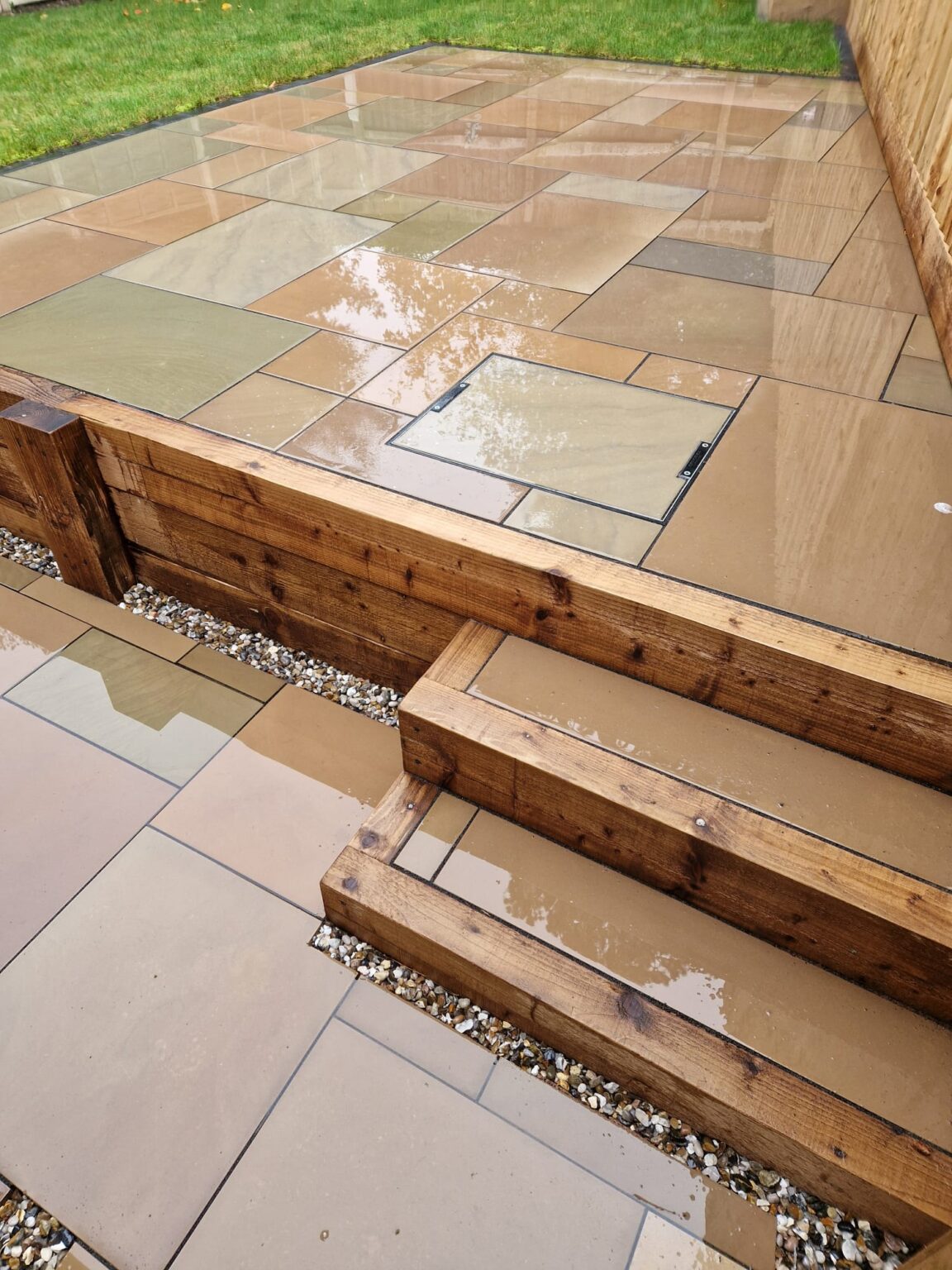
Groundworks rarely stop at the pipe. A retaining structure holding a new level needs drainage behind it and weep holes or a drain run to relieve water pressure, or it will move. Paving is kept at least 150mm below the damp proof course with the fall running away from the house. Excavation close to a neighbouring wall or foundation can bring the Party Wall etc. Act 1996 into play. If there are protected trees on or near the plot, a tree preservation order or conservation area status means works near roots need notice to the council first.
This sets out the rules that commonly apply in England and what we check on site. It is not advice on your specific property. Where a scheme needs a percolation test, a sewer connection application or a land drainage consent, we will tell you at quoting stage and price it in.


What Else We Do
Our Services
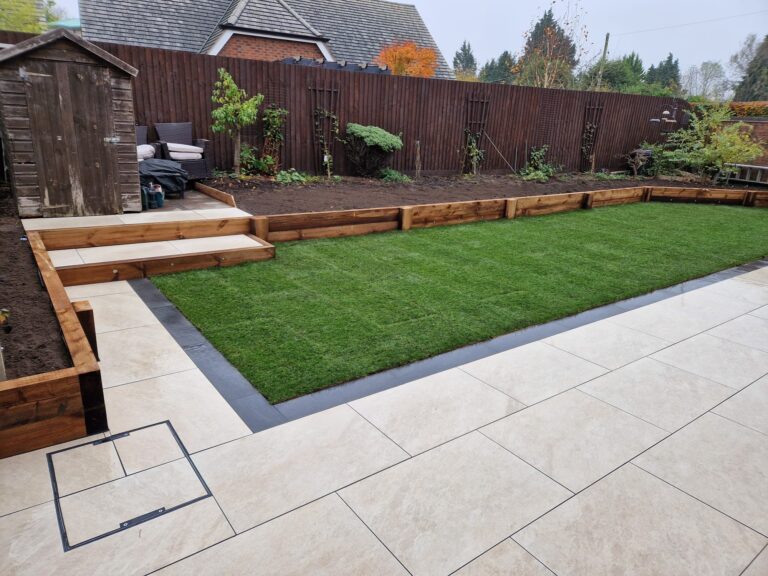 Patios & PavingPorcelain, sandstone and block paving laid on a proper base with the falls worked out first.View service
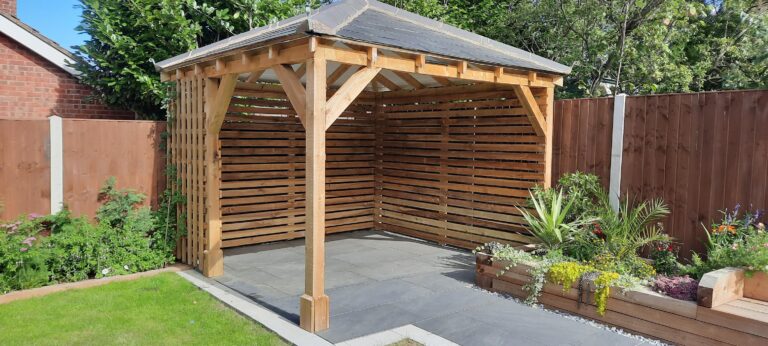 Garden Design & LandscapingFull garden makeovers that set levels, drainage and planting out as one plan rather than piecemeal.View service
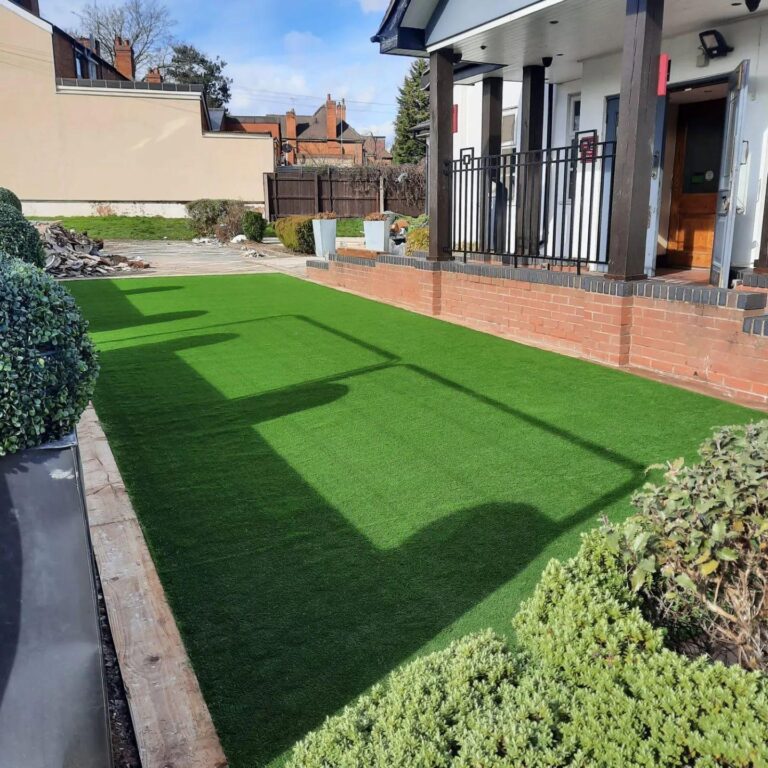 Turfing & Artificial GrassNatural turf and artificial grass laid over a free draining base so the surface stays usable.View service
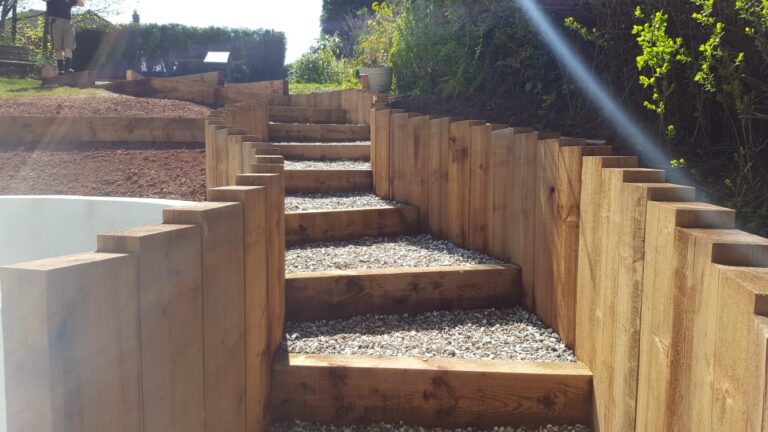 Garden Walls & BrickworkRetaining walls, sleeper terraces, steps and brick edging built to hold ground and shed water.View service
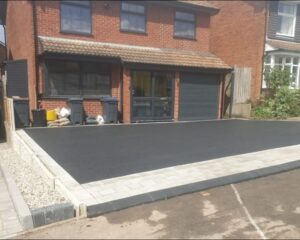 Driveways & SurfacingBlock paving, tarmac, gravel and resin bound driveways installed across Birmingham.View service
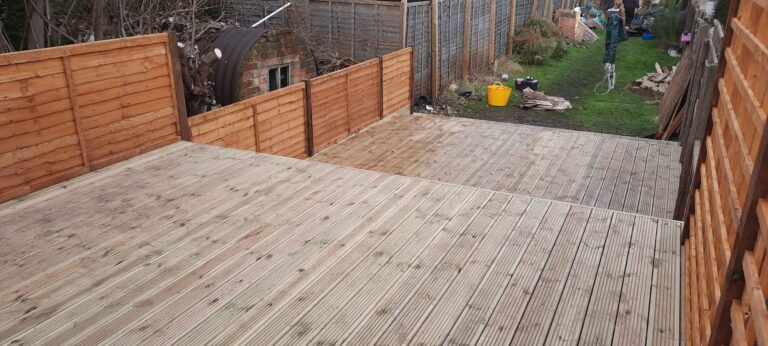 Fencing & DeckingClose board and panel fencing, gates and timber decking built to last a Birmingham winter.View service